
Web App & Custom Software Development · sub-service
App Rescue & Refactor
Inherited a slow, undocumented, or half-finished Laravel app? We'll stabilise it first.
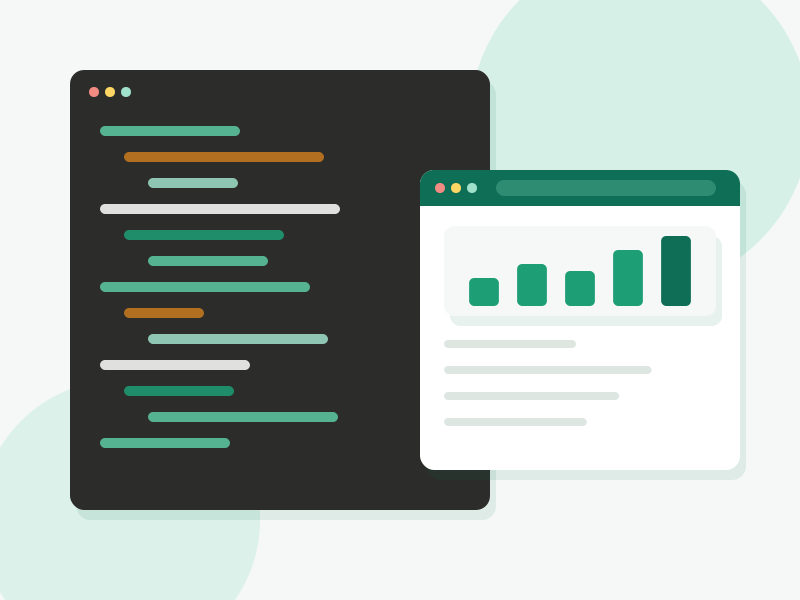
Not every project starts from a blank page. Many of the Laravel applications we work on were started by a freelancer who moved on, an agency that went quiet halfway through the build, or an internal developer who left without writing anything down. The app is live or nearly live, the business depends on it, and nobody currently involved is confident about changing it. App rescue is the work of getting that system back under control.
The symptoms tend to repeat. Pages that load slowly and get slower each month. Deployments done by copying files onto the server by hand. No tests, so every change is a gamble. PHP or Laravel versions that have reached end of life and no longer receive security fixes. Configuration and passwords stored in the codebase. Features that were half finished and then hidden. For UAE businesses, the situation is often complicated by the fact that the original developer was never under a proper contract, so even access to the hosting and repository has to be recovered first.
Our first move is always the same: stabilise before improving. We start by securing access to the code, the servers, the domain, and the third-party services the app relies on, and moving them into accounts you own where they are not already. Then we take a full backup of the database and files, set up the application locally, and get it running in a staging environment that mirrors production. Until we can reproduce the live system safely, we do not change it.
Next comes the assessment. Your delivery lead reviews the codebase, dependencies, database structure, server configuration, and error logs, and writes up what we find in plain language: what is risky, what is slow, what is insecure, and what is simply untidy but harmless. Each issue is ranked by its impact on the business rather than by how much it offends a developer. Your strategist then walks you through the report on a call and agrees the scope of the rescue, which is quoted at a fixed price before work begins.
Stabilisation work usually includes setting up version control and automated deployments, adding error tracking so problems are visible, fixing the most serious security issues, and upgrading PHP and Laravel to supported versions in safe steps. Before touching the most important business logic, such as payments, bookings, or pricing, we write tests around its current behaviour so that any change we make can be checked against what it did before.
Only then do we refactor, and we do it incrementally. Rather than proposing a full rewrite, which carries its own large risks and usually takes far longer than anyone expects, we improve the system piece by piece while it stays in use. Slow queries are fixed, duplicated code is consolidated, unfinished features are either completed or removed, and the structure is brought closer to standard Laravel conventions so future developers can find their way around.
What you receive is an application you control, running on supported versions, deployed through a repeatable process, monitored for errors, covered by tests around its riskiest logic, and documented well enough that another competent developer could pick it up. You also receive the assessment report, a record of what was changed, and a prioritised list of further improvements for later phases.
The pitfalls in rescue work are mostly about impatience. Starting a rewrite before understanding what the current system actually does, and discovering months later that it handled cases nobody remembered. Upgrading several major versions at once instead of stepping through them. Fixing performance by adding more server capacity rather than finding the slow query. Changing business logic with no tests to confirm nothing broke. And leaving access with the previous developer because the handover felt awkward.
Timelines depend heavily on what we find. Recovering access, backing up, and setting up staging is usually quick. Stabilisation and version upgrades typically take a few weeks for a moderately sized app. Deeper refactoring is best treated as ongoing phased work rather than a single project, so the business keeps running while the code improves.
If you have inherited a Laravel app and are nervous about changing it, book a call. We will start by telling you what state it is really in.
More from Web App & Custom Software Development
-
SaaS MVP
A 4-week sprint to a working product you can put in front of real users.
Read -
Custom Dashboards & Internal Tools
Replace the spreadsheet-and-Slack-thread workflow with software your team actually wants to use.
Read -
Marketplaces & Booking Platforms
Multi-vendor marketplaces, booking systems, and platforms with real payment flows.
Read -
API Development
Clean, documented, versioned APIs, for mobile apps, partners, or internal services.
Read -
DevOps & Hosting
CyberPanel, AWS, or DigitalOcean, deployed, monitored, and documented.
Read
How we deliver
How we deliver App Rescue & Refactor.
Your strategist scopes the work, the delivery lead ships it, and you see progress in the same monthly report as the rest of your account.
Guides on this topic
All insights-
Comparison
SEO agency vs freelancer vs an in-house hire in the UAE
A freelancer suits one well-defined task, an in-house hire suits a business where SEO is a full-time priority, and an SEO agency...
-
Comparison
Shopify vs WooCommerce for UAE businesses
Choose Shopify if you want a fully hosted store with less technical maintenance, and choose WooCommerce if you want full ownership of...
-
Comparison
WordPress vs custom website: how to choose
Choose WordPress for a content-managed site you can launch quickly and affordably, and choose a custom build, such as one on Laravel,...
Ready when you are
Your customers are searching in the UAE. Make sure they find you first.
A free audit of your technical setup, content, and backlinks, reviewed by a real person within 2 business days. No card, no obligation. Just a straight answer on what's working and what isn't.