Mobile App Development · sub-service
Mobile App MVPs
The smallest working app that lets real users tell you what to build next.
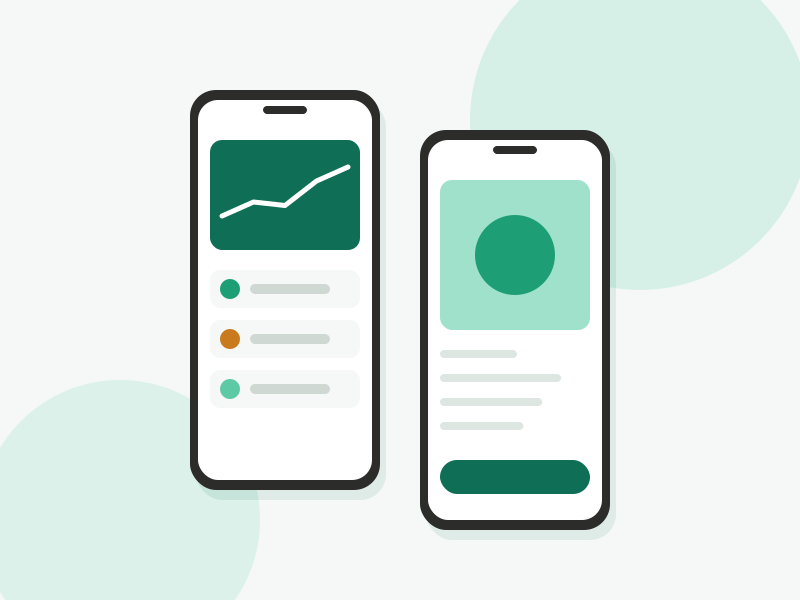
A mobile MVP is the smallest version of your app that a real person would download, open, and use more than once. It is not a set of screens in a design tool or a clickable demo that falls apart when someone taps the wrong button. It is a working app, installed from a store or a test link, connected to a real backend, and capable of showing whether the core idea holds up when strangers use it.
The reason to build one is learning. Most app ideas carry a long list of assumed features, and most of those assumptions turn out to be wrong once users arrive. An MVP puts the central idea in front of real customers or investors quickly, so the next round of work is based on what people actually did rather than what the team guessed they would do.
We start by cutting the idea down to the two or three core screens and actions that prove the concept. For a delivery app that might be browsing a menu, placing an order, and tracking it. For a service booking app it might be choosing a time, paying, and receiving a confirmation. Everything else, the settings screen, the loyalty programme, the referral scheme, the detailed admin dashboard, waits until the core has been proven to work. Those features go onto a written backlog, so nothing is lost, only postponed.
This approach fits two kinds of client in the UAE and wider GCC. The first is a founder who has validated demand, perhaps by running the service manually, through a website, or over messaging apps, and now needs an app to scale it. The second is an established business testing whether a mobile app is worth the ongoing investment before committing to a full feature set, such as a restaurant group, a gym, or a retailer weighing an app against improving its website.
The process begins with a scoping workshop on a call with your strategist and delivery lead. We agree the one question the MVP must answer, who the first users are, the core journey, and the measures that will tell you whether it worked, such as sign-ups completed or repeat orders. We then choose between Flutter and React Native based on your plans for the product and your future team, and design the Laravel API that sits behind the app. The scope is written down and quoted at a fixed price before any code is written.
Design and build run quickly and in the open. We design only the screens in scope, with their error and empty states, then build in short cycles and share test builds you can install on your own phone. A lightweight admin view is included where the MVP needs someone on your side to approve orders, manage listings, or answer requests, because an app that cannot be operated is not really a test. Analytics are set up from the first release so the learning is measurable.
When the core journey works reliably on real devices, we prepare for release. Depending on your goals, that might be a public listing on the App Store and Google Play, a closed testing group for early customers, or an internal release for staff or investors. We handle the store submission either way.
What you receive is a working app on iOS and Android, its Laravel backend deployed on hosting you own, the source code for both in your repositories, basic analytics and crash reporting, a short guide to operating the app, and the prioritised backlog of features deliberately left out. That backlog, combined with what early users do, is what we plan the next phase around.
The pitfalls are mostly about scope creep dressed up as ambition. Adding social login, chat, and a loyalty scheme before anyone has completed the core journey. Polishing animations while the payment flow is still unreliable. Building without analytics and then having no way to tell whether the MVP succeeded. Treating the MVP as throwaway code, then trying to scale it. And launching publicly without a plan to recruit the first users, which leaves a working app with nobody using it.
On timing, a focused mobile MVP with two or three core journeys and a simple backend is typically measured in weeks to a couple of months, plus the store review period. Payment integrations, maps, and real-time features add time, and we name them during scoping rather than discovering them mid-build.
If you have an app idea and want to know the smallest version worth building, book a scoping call and bring the full wish list. We will help you decide what waits.
More from Mobile App Development
-
Flutter App Development
One codebase for iOS and Android, built on Google's own toolkit.
Read -
React Native App Development
JavaScript and React, compiled down to genuinely native iOS and Android apps.
Read -
App Store & Google Play Launch
Submission, review, and listing setup for both stores, handled for you.
Read
How we deliver
How we deliver Mobile App MVPs.
Your strategist scopes the work, the delivery lead ships it, and you see progress in the same monthly report as the rest of your account.
Guides on this topic
All insights-
Comparison
SEO agency vs freelancer vs an in-house hire in the UAE
A freelancer suits one well-defined task, an in-house hire suits a business where SEO is a full-time priority, and an SEO agency...
-
Comparison
Shopify vs WooCommerce for UAE businesses
Choose Shopify if you want a fully hosted store with less technical maintenance, and choose WooCommerce if you want full ownership of...
-
Comparison
WordPress vs custom website: how to choose
Choose WordPress for a content-managed site you can launch quickly and affordably, and choose a custom build, such as one on Laravel,...
Ready when you are
Your customers are searching in the UAE. Make sure they find you first.
A free audit of your technical setup, content, and backlinks, reviewed by a real person within 2 business days. No card, no obligation. Just a straight answer on what's working and what isn't.